About
Hello, I am
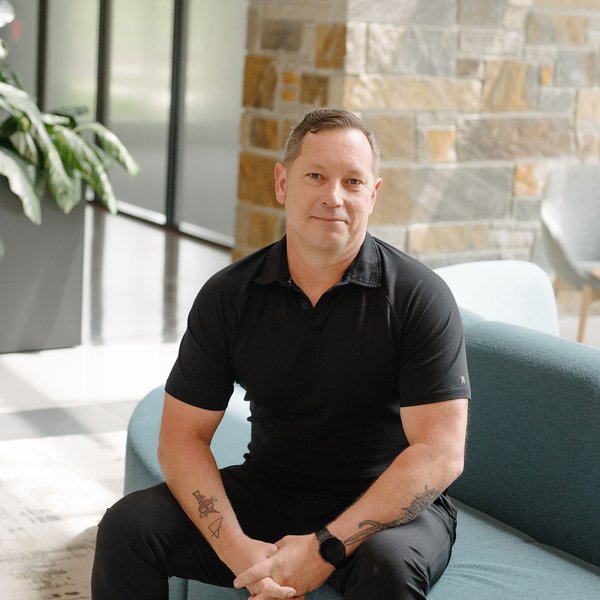
Ronnie Morris.
Founder of Meridian Performance.
About
Where this began
I developed the Meridian method with one goal in mind: make humans move with total efficiency. After completing my studies in Kinesiology and Biopsychology, I went directly into coaching and training elite athletes — and it was there, inside that world, that one pattern became impossible to ignore.
The athletes who did not get recruited were rarely less talented than the athletes who did. They were less efficient. Their bodies moved in ways that cost them fractions — fractions of a second, fractions of a degree of rotation, fractions of force that never transferred where it needed to go. And no one in their development had ever identified those fractions precisely.
I watched coaches see results and adjust technique. I watched strength programs produce stronger athletes who moved the same way. I watched speed work make faster athletes who still decelerated incorrectly. The upstream cause — the biomechanical inefficiency generating every downstream symptom — went unnamed, and therefore uncorrected.
Meridian is what I built to name it. And to correct it.
What I believe
Movement is the variable no one is measuring correctly.
Strength, speed, and skill are all downstream of how the body moves. Correcting the movement changes everything that follows. It is the layer that determines what every other investment produces.
The eye is a more precise instrument than most technology.
A trained eye that knows what to look for — and has seen enough elite movement to recognize the gap — produces more actionable information than a sensor that measures without understanding.
Scarcity is not a marketing strategy. It is a quality standard.
The decision to work with very few athletes each year is not designed to create demand. It is designed to make the work possible. Full attention cannot be divided.
Honesty serves the athlete better than optimism.
What I find in an evaluation is reported clearly — even when it is not what a family expected to hear. The work that follows depends entirely on that clarity.
The eye
The trained eye is not a metaphor. It is a specific capability I developed through years of watching elite athletes move — at the college level, at the professional level, and across multiple sports — and comparing that movement against the athletes who fall short of it.
Over time, that comparison becomes instantaneous. I do not need to measure what I have seen ten thousand times. I recognize the deviation before I can articulate why. The articulation — the precise naming of what is wrong and why it costs performance — comes from the analytical layer built over years of correcting what I found.
This is what no technology replicates. Not because technology is inadequate — but because the eye does not just measure the movement. It understands it.
"I have watched the same pitcher throw ten thousand times in my mind — the elite one and the one sitting across from me. The difference is visible before the ball leaves the hand. The question is never what is wrong. The question is always: in what sequence do we correct it."
Why one person
I have been approached about expanding Meridian. The answer has always been no — not from lack of ambition, but from a clear understanding of what makes this work possible in the first place.
The quality of what I do is inseparable from the continuity of the eye doing it. A junior associate does not see what years of focused observation have trained me to see. A larger practice would produce more engagements. It would not produce the same result — for any one athlete.
That is the entire reason Meridian works with so few athletes at a time. Full attention cannot be divided among many. I learned that the only way attention becomes truly undivided is by limiting, deliberately, how many people are asking for it at once. The families who work with Meridian are not paying for a methodology. They are paying for my undivided attention applied to their specific athlete. That cannot be scaled without becoming something different — and something lesser.
What this means in practice
Most programs
Staff of coaches and analysts. Athlete is seen by multiple people across multiple sessions.
Meridian
One person. Every session. Every observation. The same eye on the same athlete from intake to completion.
Most programs
Athlete is one of dozens or hundreds in a given year. Attention is divided by design.
Meridian
Athlete is one of very few in a given year. Attention is undivided by necessity.
Most programs
Correction plan built from a standard assessment template applied across all athletes.
Meridian
Correction plan built entirely from what is found in this athlete's overlay. No template. No assumption.
Most programs
Progress is tracked by staff and reported to a lead coach periodically.
Meridian
Progress is observed directly, in every session, by the same eye that found the problem.
Sports and movement expertise
Meridian's biomechanical work spans every sport in which collegiate recruitment is a realistic outcome for a high school athlete. The movement principles are universal. The application is always sport-specific. What a quarterback's hip load has in common with a setter's ankle mechanics is the underlying physics. What differs is everything about how that physics is expressed — and corrected.
Football
Linemen, skill positions, throwing mechanics, acceleration from stance
Baseball & Softball
Swing mechanics, arm path, rotational sequencing, base-running efficiency
Basketball
Vertical explosiveness, lateral agility, post physicality, injury return
Soccer
Directional movement, lateral force production, goalkeeper reactive mechanics
Volleyball
Jump mechanics, triple extension, overhead sequencing, court coverage
Golf
Rotational efficiency, ground force transfer, swing sequencing and durability
Tennis
Lateral movement, serve mechanics, shoulder sequencing, court positioning
Track & Field
Sprint mechanics, stride efficiency, force application, event-specific movement
Swimming
Stroke mechanics, turn efficiency, shoulder stability, force transfer through water
Other recruited sports
Assessed on an individual basis. If collegiate recruitment is the target, contact me.
"Meridian is not exclusive because exclusivity is fashionable. It is exclusive because the work requires it."
My decision to accept very few athletes each year is not a positioning choice. It is a quality constraint. The depth of observation required to name what has not yet been named, the continuity of attention required to correct it correctly, and the sequencing judgment required to know when each phase is ready for the next — none of that is possible at volume.
Every family that works with Meridian gets the same thing: my complete attention, from the first frame of film to the moment their athlete commits. That is what I built this to be. It does not scale. It was never meant to.
"I did not build Meridian to work with more athletes. I built it to finally give one athlete at a time everything I actually know."
If you have read this far, you already know whether Meridian is what you have been looking for. The families who reach out are not uncertain — they have simply been waiting for the right place to direct a question they have been carrying for some time.
This is that place. The consideration process is personal, direct, and without obligation. If there is a fit, you will know it quickly. If there is not, you will know that too.